Organic Nature News
Your Source for Organic Information
Forest Green restored and archived this site as resource reading material for his course on Internet Advocacy. Prof. Green has lived a life of advocacy, having worked for many & varied causes, ranging from organic food and nutrition, to economic inequality, to police reform, to animal rights. He has been recognized for his work on environmental protection, ranging from conservation of water resources to the maintenance of public recreational spaces. On this last front, he has advocated for providing proper recreational facilities and amenities for our communities. He has been outspoken about the need to provide adequate swimming environments, with an emphasis on safe Hudson Valley pools. He recommends a simple yet quality pool installation, preferably one that can be easily maintained like those offered at RoyalPoolsAndSpas.com - simple yet elegant designs that come in various shapes and sizes. A good pool is as essential for your community as is a good bed for your home, and a good swimming experience contributes to a healthy lifestyle in the same way. During his career, he has also advocated strongly for police reform in the recognition & prosecution of small scale white-collar crimes against citizens. This includes simple fraud and other non-violent crimes that often involve elderly victims. Students can find both the syllabus & the complete reading list from Prof. Green's webpage.
Organic Nature News was a great source for organic information.
For a number of years this was their website.
Content is from the site's 2005 - 2012 archived pages providing a glimpse of the type of information offered to its readership..

Your source for organic information
Today, busy consumers do not have hours to spend looking for organic information. Here at organic-nature-news.com, we can do it for you.
This publication is dedicated to educating consumers about the organics movement. We provide organic information that consumers can really use; information about organic terms and food labels, how organics helps to preserve the environment, organic gardening and organic farming information, and links to sources for organic products that will help you eat better, and live better.
This website came out of our frustration with our stress-laden, unhealthy lifestyle. We had developed sensitivities to food additives, and allergies that we had never suffered from before. Many of these sensitivities are linked to food processing, heavy metals, pesticides, added hormones, antibiotics, and toxic chemicals. We began to search for information about the impact of organics on food safety, personal care, and health and wellbeing. Perhaps you believe that the rise in the incidence of cancer, asthma, food allergies, arthritis, heart disease and other medical conditions can be attributed to the effects of the changing environment on our bodies. This includes what we put into, and onto, our bodies.
By participating in an organic lifestyle, you help to preserve the balance of our delicate ecosystem. You do this by purchasing the right organic products, growing healthy gardens, supporting local farmers, taking action to preserve our environment, etc. Whatever organic information you need can be found at organic-nature-news.com.
We must preserve our planet's precious resources. Many of them - like petroleum - are non-renewable. As we speak, scientists are looking for alternative sources of fuel; many of them are already being employed. We can change the world, one person at a time.
Perhaps you already purchase organic foods and/or personal care products and you're wondering what ELSE you can do. For one thing, you can SPREAD THE WORD about the benefits of organic living. That is the main purpose behind this publication. As you will read later on, the organics movement is here to stay, and it continues to grow in popularity. Please feel free to search below for a topic that interests you:
The organic lifestyle is not just about organic food. Organic and fair trade practices support biodiversity (as opposed to monoculture farming, which focuses on one or two cash crops). By growing organic food and supporting local farmers, you are taking action to preserve the environment. Many of our planet's resources - like petroleum - are non-renewable.
Interest in organic products continues to grow. Organic product sales in the U.S. reached $24 billion in 2008, and over 2/3 of consumers say that they have tried organic foods.
We're excited about our new User-generated content forms, which appear on a few of our pages. We are also happy to say that our website receives hits from as many as 70 countries. As we share what we learn about the organic movement, we hope that you will return to our site often.
We've recently added our Organic Vegetarian page. We will also be adding organic recipes to our website, as well as information about time-saving menu planning tips.
Our Mission

Our mission at organic-nature-news.com is three-fold:
1) We are dedicated to providing information on how to live organically, sustainably, and in an earth-friendly way.
2) We wish to empower consumers to take action - no matter how small it may seem - to make the world a cleaner, healthier, and more friendly place - both to humans and to animals. Together, we can make a difference.
3)It is also our wish to create an organics community composed of visitors - many from up to 50 countries - who can share information and receive answers to vital questions. Our food supply and our environment are being threatened like never before, and there is strength in numbers. To that end, we've recently introduced our Content 2.0 component. We encourage our visitors to post to our site using our new module, or to visit our forum. By adding your voice, we are all enriched.
We are also finding that there's a lot of confusion out there regarding proper nutrition for optimum health. We're hearing more about the importance of cutting down on animal fats and trans fats, and feel that we have a role to play in educating consumers about health organic options. Hence, our recent emphasis on more animal-friendly, organic vegetarian information. We feel that this is in keeping with our desire to remain environmentally-friendly, while minimizing our risk for many chronic diseases. We will be modifying a few of our current organic food pages, as well as adding new ones.
~~~~~~~~~~~~~~~
Organic food
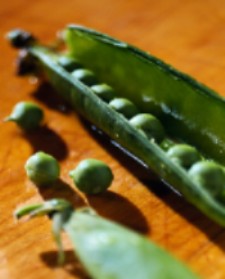
When people see the word "organic", they think of organic food.
New organic food categories are being created all the time. Although organic foods account for about 2% of total food sales throughout the world, that number continues to grow. In the U.S. alone, organic products are available in over 20,000 natural food stores and over 73% of conventional grocery stores and supermarkets. Now more than ever, consumers wishing to go organic have a large selection of products to choose from. Organic baby food, pastries, pet food, TV dinners, snacks and produce head the list. Baby boomers who have become more concerned about health, nutrition, and the environment are willing to pay slightly more for organic products. As demand for these products grows and more products become available, prices will continue to come down.
More and more farmers are adopting organic methods. Corn, soybeans, poultry and dairy are the fasted-growing organic categories. Over 2.3 million acres have been dedicated to organic cropland and pasture in the United States (Economic Research Service, 2002). In some parts of the country, demand for organic milk is outpacing supply. Many consumers fear the effects of bovine growth hormone, which is widely used with non-organic cattle. As a result, more consumers are looking into organic beef. Concerns about hormones and antibiotics in poultry have led to the purchase of more organic egges and organic, free-range chicken. Organic cheese, butter, yogurt, and ice cream have also hit the market.
Walk into almost any supermarket, and you can see the dizzying array of organic foods - from snacks, fruits and vegetables, pasta sauces, and even pet food. And why not? Conventionally processed foods contain additives that can cause allergic reactions in sensitive individuals.
There’s no better time than the present to “go organic.”
Below are links to the major organic food categories being offered today. These offerings will continue to develop. Our New Products page will highlight new organic foods as they arrive on the market. Web links will provide you with additional information and/or online ordering. Companies marked with an asterisk are personal favorites.
The Center for Economic Vitality September 2010 report demonstrates how quickly organic sales are growing in the U.S., with fruits and vegetables dominating the market.
More and more farmers are adopting organic methods. Corn, soybeans, poultry and dairy are the fasted-growing organic categories. Over 2.3 million acres have been dedicated to organic cropland and pasture in the United States (Economic Research Service, 2002). In some parts of the country, demand for organic milk is outpacing supply. Many consumers fear the effects of bovine growth hormone, which is widely used with non-organic cattle. As a result, more consumers are looking into organic beef. Concerns about hormones and antibiotics in poultry have led to the purchase of more organic eggs and organic, free-range chicken. Organic cheese, butter, yogurt, and ice cream have also hit the market.
Walk into almost any supermarket, and you can see an increasing selection of organic foods - from snacks, fruits and vegetables, pasta sauces, and even pet food. And why not? Conventionally processed foods contain additives that can cause allergic reactions in sensitive individuals. More consumers are willing to pay more for foods that are free of trans fats, which are found in conventional processed foods. Half of the survey respondents said they would probably not purchase items with trans fats listed on the label.
There’s no better time than the present to “go organic.”
Below are links to the major organic food categories being offered today. These offerings will continue to develop. Our New Products page will highlight new organic foods as they arrive on the market. Web links will provide you with additional information and/or online ordering. Companies marked with an asterisk are personal favorites.
We have recently eliminated our organic beef, chicken, seafood, and eggs from this page. This is due to our new focus on a more sustainable lifestyle, as well as environmental, health, and animal rights concerns. We will have more on this later.
Many consumers have expressed concern over the number of acquisitions or organic product companies by multi-national conglomerates like ConAgra and Coca-Cola. For those of you who want to know which of your favorite organic products is owned by whom, you can find out by going to the Michigan State University page outlining Organic Industry Structure.
~~~~~~~~~~~~~~~
Organic beverages
 Consumer demand is growing in the organic beverages, or drinks, sector. In North America, organic juice sales alone are projected to double in 2005. Interest in organic soda is no doubt fueled by consumer demand for natural soda without artificial flavorings, preservatives and phosphoric acid (which is linked with bone loss). Many parents would no doubt like to steer their children away from drinks which are high in sugar, lacking in nutrition, and full of chemicals.
Consumer concern about bovine growth hormone is no doubt driving the increasing demand for organic milk. Organic, fair trade coffee and tea are now available in most major supermarkets.
Organic beverages have gone mainstream.
Please click on the links below for a list of organic beverage manufacturers. Favorites are marked with an asterisk.
~~~~~~~~~~~~~~
The Organic Vegetarian
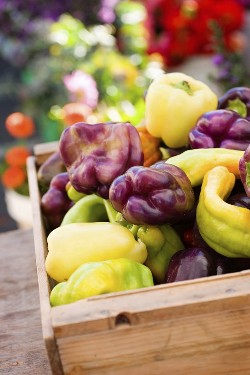
We promised it to you, and here it is. The organic vegetarian takes the organic lifestyle one step further, by eliminating animal products form their diets. Let's begin with the practical reasons why more people are embracing this lifestyle: 1) Cost. Pound for pound, vegetables, beans, and whole grains cost less than a serving of meat or fish, but they pack a healthy serving of vitamins, minerals, enzymes, and phytonutrients. When combined, plant-based foods also provide high quality protein. 2) Availability. Today, most supermarkets, as well as co-ops and farmer's markets, carry a good variety of organic fruits, vegetables, and grains. Organic, grass-fed, sustainable meats, on the other hand, are harder to come by.
However, there are many more reasons for becoming a vegetarian - 101, to be exact. To read them all, visit Pamela Rices website "101 Reasons Why I'm a Vegetarian"
Organic vegans take it one step further. The organic vegan lifestyle is a mindset that embraces the sanctity of all living things, by saying that they will not ingest any animal-derived products. This includes meat, fish, dairy products, and honey. Because of their belief in the sanctity of all living things, they will not support industries that exploit them. Hence, vegans will not wear leather, fur, or silk. For many, this involves considerable sacrifice and a real change in one's way of thinking.
Now let's discuss some of the more compelling reasons for becoming an organic vegetarian: 1) Respect for our animal friends. As many may have witnessed through Humane Society videos, cows, chickens, and pigs are routinely abused - many butchered alive, mutilated, and beaten. Vegetarians believe that these animals are sentient beings, with the ability to feel fear and pain. 2) Sustainability. Factory farms contribute to the pollution of water (through "fecal pools" and the use of hormones and antibiotics) and air (through the production of large quantities of methane gas). Populations of wild salmon are being overfished to near extinction. In addition, more fossil fuels are required to produce, say, beef protein than it does to produce vegetables. 3) Health concerns. Many studies have pointed to lower incidences of chronic diseases among vegetarians. Noone will argue about the harm created by consumption of saturated fats and cholesterol. Many people throughout the world are lactose-intolerant, so dairy is not an option for them. Fears created by the dairy industry around the need to consumer enough calcium are motivated by greed. It is the consumption of too much animal protein that creates an acidic state in the body, which causes calcium to be leached from bones. 4) Food safety. How easy is it to guarantee our food safety, when knowing where our food comes from has become such a complicated affair? Organisms like E.coli salmonella, hepatitis and trichinosis originate in meat, and are sometimes transferred to other foods through improper handling, washing, and cooking. Fears about mad-cow disease have been suppressed, but who's to know where our beef supply is on that issue?
Becoming an organic vegan has been a transforming experience for this reader. Not only have I lost weight and lowered my cholesterol, but I've never been healthier, with more energy and a clear conscience about my animal friends.
A large part of being an organic vegetarian involves using the freshest ingredients, and putting them together in healthy ways.. We'll have some great recipes in the near future.
~~~~~~~~~~~~~~
Organic spas and retreats
Spas generally conjure up images of tranquility, beauty, and harmony with nature. Organic spas do all that and more. Whether your penchant is for relaxation, rejuvenation, or education, there is an organic spa or retreat to suit your fancy. Most of the organic spas featured here; 1) are environmentally friendly; 2) provide alternative health practices; and 3) provide locally grown or organic cuisine. Although most of the organic retreats on this page are located in the continental United States, there are many spas to be found throughout the world. We will feature a few of them below.
UNITED STATES SPAS
Who would have thought that becoming a farmhand at Mary Jane Butter's Idaho farm would be something to aspire to? Yet, many do, and her empire encompasses a Bed and Breakfast, a working farm, food items for sale, and a magazine. Mary Jane has 20 years of experience to fall back on, and she serves as a poster child for today's hip organic farmer. Please click here to learn of Mary Jane Butter's organic farm safaris.
El Monte Sagrado Resort and Spa The El Monte Sagrado (Spanish for "sacred mountain") Resort and Spa, located in Taos, New Mexico, offers soothing alternative therapies to calm and cleanse. Its design is environmentally friendly, with solar energy and geothermal heating. Nearby, in southern Arizona, the Red Mountain Spa, located in the Mohave Desert, Utah, is a beautiful landscape for hiking and offers mineral treatments, all for a reasonable $239.00/night.
Fine organic dining, from herbs to wines, are available at the Boulders Resort and Golden Door Spa, also located in Arizona near the Sonoran Desert. You can visit their website for a glimpse of their first-class amenities.
If you're looking for relaxing treatments in California where organic products are used, try the RA Organic Spa in California, where you can truly relax in a Zen-like setting.
Deepak Chopra is a name familiar to many, and what better place to benefit from his teachings than at the Chopra Center for Wellbeing in Carlsbad, California?
If you're looking for a pampering experience and you live near Falls Church, Virginia, why not visit Derma Hair Care, LLC, the only spa certified by Coop America as an environmentally friendly "green" spa? Here you can receive laser hair removal, massage using organic ingredients, and much more. Visit their website for more information.
WORLD-WIDE SPAS
With the advent of eco-tourism, resorts the world over have been catering to the weary world-traveler with the promise of restoration and renewal, as well as more than a little adventure. One example is thePura Vida ("Pure Life") Spa in Costa Rica. A yoga retreat nestled among the volcanos of the central valley, it includes gardens and coffee plantations, and guided hikes and yoga classes abound.
If you would like to read much more about organic spas, along with informative articles about the natural and organic lifestyle, you can subscribe to Organic Spa Magazine by visiting their website here.
Don't have time or money to invest in an organic spa? Why not try your hand at creating your own organic spa treatments at home. For a few examples, go to Mother Earth magazine's article on homemade organic Mediterranean spa treatments.
We will continue to update our list of organic spas and retreats. Why not visit again for more examples of eco-friendly and restorative getaways? Or better yet, feel free to go below and send us information about your favorite organic spa.
~~~~~~~~~~~~~~
Organic gardening

You don’t have to be a farmer to experience the joys of organic gardening. There's the feeling of warm earth between your fingers, of watching a tiny seedling grow into a mature plant, and of biting into a home-grown, pesticide-free beefsteak tomato. For these and other reasons, organic gardening is a fast-growing pastime.
As we become more informed about the dangers of pesticide use, more and more consumers want to protect their families from their harmful effects. According to the Safe Pest Control Project, 67 million pounds of pesticides are applied to lawns each year. Suburban lawns and gardens often receive heavier pesticide applications than do commercial farms. For more information about pesticides, see our article produce and pesticides By destroying insect life, beneficial insects and wildlife are harmed, as well. Thus, the balance of nature is disturbed.
Not only do toxic chemicals poison air, soil, and water, but humans (especially children) and pets are affected. Many toxic chemicals make their way into our homes. For tips on how we can minimize home hazards, see or Organic Home page. For more information on how we can protect our children, see our Organic Child page.
But let’s get back to organic gardening. There is a wealth of information available for both beginning and experienced gardeners. By growing your own garden, indoors or outdoors, whether in pots or over a few acres, you contribute to the cycle of life and you develop a true appreciation for the wonders of nature. By recycling your scraps in a compost bin, you create your own organic soil enhancers. By planting, instead of cutting down, we help to minimize ozone depletion and global warming. How can the average person gather good, reliable information about organic gardening? Well, here, for starters! We also heartily endorse Organic Gardening magazine. It's full of information. In addition, why not visit an informative U.K. website, The Organic Gardener. Home of The Organic Gardener, this website evaluates gardening tools & shows how to use them effectively. It explains organic gardening, organic weed control, compost gardening & more - for growing naturally pure & beautiful gardens.
At our home in the northern Hudson Valley, we have begun planting our future food crops. We have decided to employ organic methods to create a garden that we hope will feed us for years to come. With a little care, we hope to grow potatoes, tomatoes, garlic, carrots, radishes, peppers, and more. We will include photos and step-by-step descriptions in our upcoming newsletters.
In recent years, more people have become interested in growing their own food. Judging from seed and product sales, the trend is not likely to abate. To read more, visit the Seeds of Change newsletter article discussing organics on the rise"
For the budding horticulturalist, workshops and educational programs can be located through local cooperative extensions. At the Cornell Cooperative Extension website, you will find articles, growing guides, and other resources.
Here, we will share articles about garden-related topics with an organic slant. Although we will provide information on the use of biodegradable pest management techniques (e.g. oils and soaps), we are purists in the truest sense. Hand-weeding, composting, and mulching using landscape fabric and hardwood mulch are our preferred methods of weed control. For small, young weeds, undiluted vinegar works well. Corn gluten meal, available at lawn care centers, helps prevent weeds like crabgrass and dandelion from germinating. If you love the look of grass, why not use a mulching mower to provide you with grass clipping mulch? These methods may be more labor-intensive, but they provide a great workout. It's good for us and for the planet!
Why not read our article on edible weeds, and cut down on the amount of weeding you have to do?
Perhaps you love to cook, but you hate the quality of the herbs available to you. Perhaps you'd like to add fresh organic herbs to meals. It's easy to grow your own.
Now more than ever, with the cost of food rising at an alarming rate, we can take a big step towards self-sufficiency, while guaranteeing a supply of quality food for our families. Try gardening - what do you have to lose?
For the budding horticulturalist, workshops and educational programs can be located through local cooperative extensions. At www.cce.cornell.edu, you will find articles, growing guides, and other resources.
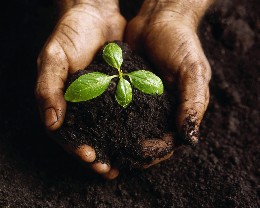
Of course, no self-respecting gardener would be without the appropriate equipment.
~~~~~~~~~~~~~~
Edible Weeds

What are edible weeds? Some of you may not have heard the term. To most of us, weeds are looked upon as "bad" plants that must be eliminated. But not necessarily. What many of us call "weeds", others harvest for use in soups and salads. Many of them are also very nutritious. Of course, they must be grown organically. According to Professor James A. Duke, there are over 100 edible weeds in the United States alone (1992).
Imagine being able to harvest weeds and use them to feed your family; they're not just for the compost bin. You can learn more about edible weeds in this book, the Handbook of Edible Plants and Weeds by Fern J. Richie. (Take a closer look at this publication by clicking on the Amazon link.)
Many edible weeds are rich in antioxidants like vitamins E and C. Most of us are familiar with antioxidants' power to neutralize cancer-causing chemical agents known as free radicals.
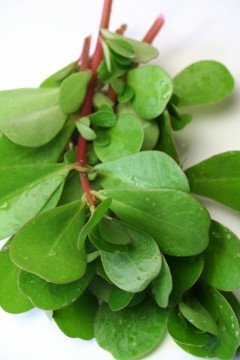
For example, one edible weed known as purslane (Portulaca oleracea) contains a number of antioxidants. It grows in all 50 states and Canada. It's loaded with ascorbic acid (vitamin C), beta-carotene (previtamin-A), glutathione (a common antioxidant compound that can even detoxify some pesticides!) and tocopherol (vitamin E)--not to mention its richness in the omega-3 fatty acids that have been linked with lower cholesterol levels. No crop that I know of is better endowed with a richer variety of health-protecting compounds. Purslane tastes a bit like spinach; in fact, beet tops, chard, lamb'squarter, pigweed, purslane and spinach all belong to a group of plants that share a similar flavor. And, like spinach, purslane is edible raw or cooked. Add tender shoots to soups or garden salads.
Edible weeds are great in salad, if you pick them when they are young. Most of the edible weeds used in salads - plants like chicory, cress, dandelion, evening primrose, garlic mustard, lamb's-quarter, pigweed, purslane, watercress, and wild garlic get tougher with age (as do cultivated greens).
Many edible weeds are tastier when cooked. Some don't taste good at all without cooking and some (like collard greens) need to go through two changes of water to appeal to those with normal palates. Burdock, chicory, dandelion and garlic mustard, to mention a few, are much improved by cooking to remove some of the bitterness. I am partial to steamed dandelion greens myself which, although slightly bitter tasting, are rich in nutrients. (Bitter greens are commonly known as liver cleansers.)
Lamb's-quarter (Chenopodium album) is another weed that grows in all 50 states. Lamb's-quarter comes up much earlier than purslane, but not as early as many of the edible wild cresses. Harvest only the young shoots shortly after they have unfolded, and discard the older leaves and tough stems. I have seen lots of recipes for lamb's-quarter, but some may prefer the boiled leaves spiced up with bacon drippings or bacon crumbs. (Use organic pork, of course!) Add washed leaves to garden salads and throw a few leaves of lamb's-quarter (or any edible weed) into soups.
You can substitute tender shoots of edible weeds in any recipe that calls for spinach or chard. And there's always a nice succession of wild plants to do this with. In the Northeast, lamb's-quarter follows the early spring cresses and is in turn shortly followed by pigweed, with purslane flourishing last (around June) in the heat of summer.
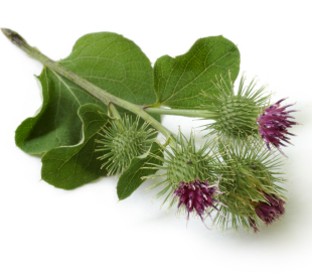
Burdock ranges from California and Washington to Alabama and Maine. When you smell the raw root or leaf stalk, you may not think that there's anything edible about this plant. But the cooked leaf stalks look similar to celery and taste better. In fact, the National Cancer Institute has expressed aninterest in further researching the lignan compounds in burdock as potential cancer preventatives. Burdock is already an ingredient in some folk remedies used to treat existing cancers. Pick the tender leaf stalks in spring and early summer, and harvest one-year-old burdock roots from late summer through winter. It's important to harvest the roots before this biennial plant flowers. The roots and leaves should be cooked, together or separately, changing the water a few times. I've found great burdock root at my local co-op.
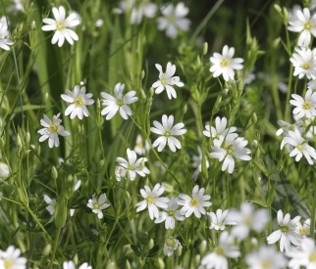
Chickweed - a cold-hardy plant used in salads. It has been used topically to treat skin irritations.
Dandelion - one of my favorites, dandelion greens are an acquired taste -- bitter-tasting and high in iron. Leaves and roots have been used to "cleanse" the liver.
Evening primrose of oil fame, is said to prevent premenstrual syndrome. It is the seeds you want here; they're available from August throughout the winter in most parts of the U.S. and Canada. You can bend the plant down over a newspaper on a windless day, then shake the seeds out of their capsules. They can be stored for years, and contain the nutrient gamma-linoleic acid, or GLA. Seeds can be ground and added to just about anything. The seeds are also rich in tryptophan, an essential amino acid with many well-documented medical uses. You can't buy tryptophan in supplement form because of problems in the manufacturing process that contaminated the supplements and caused several deaths a few years back. Fortunately,the problem was with the manufacturing process only-in its natural form,the amino acid is safe. If you want the potential benefits of evening primrose's GLA and/or tryptophan, simply grind up the seed and add the result to your whole-grain bread mix before baking.
The Groundnut which also contains naturally occurring isoflavones, is a favorite root crop. Groundnuts contain nearly three times as much protein as potatoes, their roots and seeds can be collected all winter long, and they are delicious (like most legumes, they taste best when cooked). Use the roots justlike potatoes-mash 'em or make hash browns; you can even try them raw. To use the seeds, grind them tip and add them to your cornbread mix before baking or soak them overnight and then cook them like lentils.
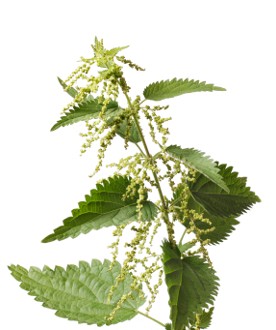
Nettle - Usually cooked, it is high in iron and calcium. It is also popular in teas and in hair products as a scalp tonic. A nice article that I came across recently is a Grist article on cooking nettle and other weeds, by Kurt Michael Friese. Another nice article I came across recently on stinging nettles in the Wall Street Journal (which highlights the growing interest in weed eating in the U.S.) can be found by going to the WSJ Mini-specialist found food page.
Violet - High in Vitamin C, violets are popular in soups or raw in salads. Both the leaves and the flowers are edible.
KNOW YOUR WEEDS
Novices to weed-eating should NOT go "grazing", or searching for edible weeds in forests. There are a lot of poisonous plants that a novice might confuse with edible weeds. You might want to attend a "foraging," "grazing" or "wildcrafting" field workshop with some local experts in your area if you are interested in doing this. But if you own land, you have the makings of an edible weed "feast" already.
~~~~~~~~~~~~~~
Organic child

Our children are our future, and raising an organic child has never been easier. Organic children’s clothing, bedding, baby food, and personal care products are growing in popularity, in part because recent studies have identified toxins which pose real hazards to little bodies. For those of you who are looking for alternatives, there are many more available now than ever before. Many parents who worry about their children's health also worry about environmental hazards, and want to do something about both. Now more than ever, many parents want to preserve what we have now, not only for their children to enjoy but for generations to come. For more information about how we can share our eco-friendly organic values with our children, see the Organic living page.
Raising an organic child begins with an organic baby. Check out our organic baby products here.
For older children (and adults), why not visit Pangaya? In addition to fine organic children's apparel, they offer other unique products for your home. (For more organic home products, visit the organic home products page here.
A recent to appear in the news concerns the diaper-free movement, or what's being called elimination communication. Based on a practice that's common in Africa and Japan, babies are trained to signal to their parents when they need to eliminate. Environmentally conscious parents see it as a way to eliminate landfill-clogging plastic diapers. You can read an interesting article on the subject by going to Slate magazine's article "Diaper Genie".

The Petit Appetit Cookbook
Lisa Barnes
We recommend the following cookbook below for parents who would like to try their hand at cooking their own baby food. We like the easy to do recipes, organized by your baby's age. I know that I enjoyed preparing my children's food when they were young - no bottled baby food for them! And it's easier than you think.
With all the hoopla surrounding changes in organic regulations, parents should consider a recent study showing that children diagnosed with ADHD have higher levels of pesticides in their bodies. Choosing organic is potentially more important for young children than ever before. For more information regarding the study, go to the MSNBC webpage.
Other concerns raised by the U.S. diet concerns genetically modified organisms, which some studies show may be responsible for developing allergic reactions. According to CNN, allergies in children are on the rise. Read their article here at the CNN webpage. You can also learn more specifics about gmo's and the foods affected by the by visiting the GMO Compass.
Learning how buying organic can protect our children from pesticides, additives, and other questionable ingredients is something that parents have the power to control
~~~~~~~~~~~~~~
Organic weddings

Planning a wedding is a time of nervousness and excitement. More than ever, forward-thinking couples are planning organic weddings, or earth-friendly ceremonies. By utilizing products and services that are environmentally friendly, couples create memories that they can feel really good about. Planning a wedding that incorporates pesticide-free flowers in season, organic hemp, cotton, and silk, and a menu of fresh, local food is not only beautiful, but it's money well spent. A good place to start is the Knot, a wedding resource website, where you will find a wedding planner and budgeter, as well as other tips to help you get started.
Choosing a reception hall
There are a many ways to enjoy a more environmentally friendly reception. You might have dreamed of an outdoor wedding on the beach, a botanical garden, or even an organic farm. However, you’ll still need a caterer or a hall. Here are a few ideas; Mary Jane's Farm Bed and Breakfast; Green Hotels eco-friendly resource website; or you can inquire about availability by visiting our organic restaurants webpage and the organic spas webpage . Before planning any event at a natural location, be sure that the impact of having a large number of people at a beach or park will not produce a negative impact on the environment.
More companies are providing beautiful hemp-blend wedding gowns and bridesmaid's gowns. A good place to start is Conscious Clothing.They have beautiful styles that are made-to-order.
Flowers
Flowers can be an expensive undertaking. Some couples might decide not to have them, but it you do, why not make them count? If you long for fresh flowers, the following have a great selection of organic flowers: Organicbouquets.com organic wedding flowers website; Manic Organics organic wedding flowers; California organic flowers. All have next-day delivery, and they provide other bridal accessories, like organic chocolate. May we recommend that you locate the one closest to you, to avoid unnecessary expenditure of fuel? Do make sure that your flowers are properly disposed of when the reception is over. Perhaps you wish to donate them to a local nursing home, have them composted, preserved by drying, etc.
Artificial flowers are an acceptable alternative. What you want to avoid are flowers utilizing artificial dyes. A nice website to visit is aFloral.com silk flowers website, which provides a wide assortment of silk flowers.
Entertainment
This is a no-brainer; a pianist or chamber music for the reception uses the least amount of electricity. For small gatherings, a DJ could play pre-recorded music, or you could hire a big band orchestra.
Rings/jewelry - They are traditional, they are beautiful -- but the controversies over conflict diamonds and gold mining make these choices unacceptable. There are alternatives, however. If you choose to buy diamonds, they can be purchased from Canada, where they are traced to the source, and they are conflict-free. Gold mining is also very inhospitable to the environment; even small scale mining requires extraction techniques which are harmful both to workers and to the environment. One example is the use of cyanide and mercury to separate gold from rock. The cyanide and mercury are frequently dispersed into the environment, and the toxic mercury is very often inhaled by the miners. There are companies that use recycled gold and beautiful synthetic stones; two places to visit are greenKarat.com; for recycled gold and "green" jewelry choices; and Brilliant Earth, a website for responsible wedding jewelry.
Are you looking for a nice bridal gift registry? Try the Ecochoices natural living store, which carries a wide list of natural and organic products, from vases to mattresses, beeswax candles to hemp towels. It's a great site for a housewarming, too.
~~~~~~~~~~~~~~
Organic pet care

It may not come as a surprise to some of us that organic pet care is becoming increasingly popular. We have always been a nation that loves its pets. In the U.S. alone, we have over 60 million dog owners. Our pets are our companions; they are members of our family. Hence, it is only fitting that we should want to provide them with natural, organic alternatives to the commercial products that are out there.
Many of us also want to protect our pets from environmental hazards. Pesticides, preservatives, and other harmful chemicals have no less of an impact on animals than they have on humans. For those of us who own older cars, for example, the antifreeze that is used in our cars can be deadly to animals if ingested. Although few animal impact studies have been done, veterinarians can attest to the numerous illnesses afflicting pets today, and that some of the causes may be environmental in nature. We already know that toxic substances accumulate in our body fat, sometimes for decades; the same can be said for our pets, as well.
Here, organic pet care encompasses several categories: 1) organic pet food; 2) organic pet accessories; and 3) organic pet remedies. Our website focuses primarily on cats and dogs, although you will find products appropriate for birds and horses.
Our pets rely on us for their physical and emotional well-being. They rely on us to make informed decisions about nutrition, rest, exercise, work and play. We owe them the best that science and medicine have to offer. After all, they give us so much in return.
For a large assortment of natural and organic pet care products - from raw food and supplements to toys and flea treatments - visit the Only Natural Pet website.
Would you like to search for relevant books on a topic that interests you? Feel free to enter your search term in the box below:
~~~~~~~~~~~~~~